Welcome to the archive of Construct Ireland, the award-winning Irish green building magazine which spawned Passive House Plus.
The feature articles in these archives span from 2003 to 2011, including case studies on hundreds of Irish sustainable buildings and dozens of investigative pieces on everything from green design and building methods, to the economic arguments for low energy construction.
While these articles appeared in an Irish publication, the vast majority of the content is relevant to our new audience in the UK and further afield. That said, readers from some regions should take care when reading some of the design advice - lots of south facing glazing in New Zealand may not be the wisest choice, for instance.
Dip in, and enjoy!

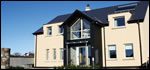
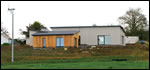
A new development at Grange Lough, Rosslare, reveals that passive houses can be made Irish – both in terms of what they’re built with, and how they look.

Since the announcement last September by the Minister for the Environment of substantial improvements to be made under Part L of the Building Regulations, speculation has been rife in the construction industry about what the details of the updated regulations would entail. Jeff Colley examines some of the key parts of a regulatory improvement that will help the Irish construction industry to modernise and meet the demands of a rapidly changing world.

Passive houses have long been considered the ultimate in low energy buildings. So when it comes to BERs, why don’t they always get a straight A? Lenny Antonelli investigates.

In this adapted extract from his new book Natural Building: A Guide to Materials and Techniques, seminal eco architect Professor Tom Woolley outlines some of the reasons why natural building is necessary.

As interest in sustainable building continues to escalate, Construct Ireland is increasingly unearthing buildings that betray an ambition to break new ground under a plethora of green criteria. John Hearne visited one such house in County Louth, and found a project driven by passive house and BER scale-topping ambitions combined with on-site energy and water supply strategies and a commitment to the use of green materials

If you’re not assessing the environmental performance of your suppliers and their products, it’s rapidly becoming a case of “caveat emptor”. Many of the world’s biggest companies are now buying green, and the Irish government is about to follow suit. Ignore the issue and you put your company at a competitive disadvantage, argues Brian O’Kennedy, managing director of Clearstream Solutions

A new public park on the northside of Dublin combines wind power and sustainable water management with environmentally sound materials and strategies to boost biodiversity, making it a standard-bearer in urban design. Lenny Antonelli visited the site

Patrick Daly, co-founder of the RiSE (Research in Sustainable Environments) research unit in the DIT has undertaken an in depth study and critique of the current Irish Part L for energy efficiency in dwellings, comparing it in detail to the UK equivalent. The findings raise challenging questions about the Irish standards and methodology and highlight serious shortcomings in comparison to our UK neighbours, permitting substantially higher levels of CO2 emissions from new homes in Ireland than in the UK.

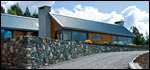
Few words in the vocabulary of Ireland’s built environment come with more baggage than ‘bungalow’. For many people, it embodies a total disregard for good architecture and the environment, in part due to its association with isolated one-off housing. John Hearne visited a house in Mayo that mixes considered design with a host of modern technologies to breathe new life into the form.