Generation 'S'
Kirk Shanks, Senior Researcher at the Sustainability Research Development Group, the Focas Institute, DIT describes the development of this new sustainable generation.

Welcome to the archive of Construct Ireland, the award-winning Irish green building magazine which spawned Passive House Plus.
The feature articles in these archives span from 2003 to 2011, including case studies on hundreds of Irish sustainable buildings and dozens of investigative pieces on everything from green design and building methods, to the economic arguments for low energy construction.
While these articles appeared in an Irish publication, the vast majority of the content is relevant to our new audience in the UK and further afield. That said, readers from some regions should take care when reading some of the design advice - lots of south facing glazing in New Zealand may not be the wisest choice, for instance.
Dip in, and enjoy!
Kirk Shanks, Senior Researcher at the Sustainability Research Development Group, the Focas Institute, DIT describes the development of this new sustainable generation.
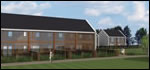
As of 2006 there is more and more talk in Ireland about the house of tomorrow and some very progressive houses have been built that go far beyond the basic legislative requirements for modern housing. Among them is Baile Glas, a development of twelve social and affordable housing units in Lombardstown, County Cork, initiated by the Blackwater Resource Development Agency and Cork County Council. Construct Ireland’s Jason Walsh finds out more.

Jeff Colley spoke to Commissioner Piebalgs about key issues affecting Ireland’s energy future and the importance of local initiatives such as Fingal County Council’s groundbreaking introduction of sustainable building requirements

Ireland's largest passive house development to date, Shanganagh Castle, is proof that with proper planning and collaboration, delivering high density housing doesn’t mean compromising on quality or climate action – without increasing costs or causing delays.
Although not a particularly sustainable building in many regards, there is much environmental merit in the Dominic Stevens designed Mimetic House, a 1300 Sq. ft structure built for e120,000 near Dromahair, Co. Leitrim. The house’s builder Conor McManus of GreenTek Construction, specialists in building highly ecological, low energy, airtight homes and extensions, describes the sustainable aspects of the house.
The unprecedented development seen in Ireland in the Celtic Tiger years was fueled by the availability of cheap, abundant fossil energy. As the boom ends, the state is attempting to boost the economy with investment in larger than ever infrastructural projects which will not benefit many of the tax payers who are funding them, and crucially don’t recognize the extent to which peak oil production will affect their viability, as Richard Douthwaite reveals.

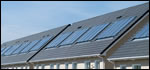
The mainstreaming of sustainable building technologies is manifesting itself in a growing number of developers seeking to find the greener option. Jason Walsh describes a recent project where airtight timber frame construction meets high-tech solar thermal in a North Dublin House of Tomorrow funded scheme which is delivering low carbon results
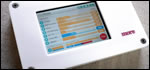
The introduction of smart metering later this year presents a great opportunity to engage Irish people en masse into substantially reducing their energy consumption, simply by showing them how much electricity they’re consuming, and how much the cost varies at different times of the day. However, as Richard Douthwaite warns, there is a real risk that smart metering may come in a form that benefits the electricity companies and not the end-user.