EPA calls for low carbon economic recovery
 ECONOMIC RECOVERY when it comes must involve Ireland developing a
low-carbon “smart, green economy”, the Environmental Protection Agency
(EPA) said yesterday.
 ECONOMIC RECOVERY when it comes must involve Ireland developing a
low-carbon “smart, green economy”, the Environmental Protection Agency
(EPA) said yesterday.
THE IRISH Farmers’ Association has claimed 8,000 “green collar” jobs could be created by developing the renewable energy sector in wind power and biomass.

Earlier this year constructireland.ie broke the news of the introduction of the pilot Home Energy Saving Scheme, a new grant funding programme designed to stimulate the en masse refurbishment of Ireland’s poorly performing existing housing stock. John Hearne travelled to one of the pilot areas to see how the scheme is working on the ground, and discover how the scheme is developing.
With the building of a new house in Greystones, County Wicklow, Ireland has become only the third country to feature the work of Frank Lloyd Wright. Jason Walsh visited the site to see if Wright's designs might just represent the kind of thinking required in today's energy-conscious buildings.
As Ireland struggles to meet its commitments to reducing CO2 emissions in accordance with the Kyoto Protocol, the renewable energy sector continues to flourish as wind farms rapidly develop and solar energy becomes increasingly viable
Construct Ireland investigates what measures the Irish government is undertaking to actively encourage the homeowner to switch to non-polluting renewable energy sources.

In light of the failure of AER 5 and the widespread pessimism in the wind industry regarding converting AER 6 contracts into operating wind farms, we asked the six main political parties what their proposals are for the development of an Irish wind industry.

Woodspec -First Timber Specifiers Guide Produced in Ireland

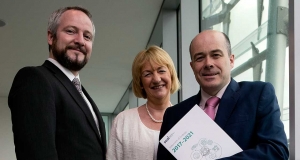
The Sustainable Energy Authority of Ireland has announced a new €5million deep retrofit pilot programme for 2017 projects to upgrade inefficient buildings to an A3 rating or better – with a particular emphasis on ventilation, airtightness, thermal bridging, interstitial condensation and preventing overheating. Grants are available to cover between 50 and 95% of the costs of deep retrofit works for di�fferent categories of participants.