From the Construct Ireland archives


Welcome to the archive of Construct Ireland, the award-winning Irish green building magazine which spawned Passive House Plus. The feature articles in these archives span from 2003 to 2011, including case studies on hundreds of Irish sustainable buildings and dozens of investigative pieces on everything from green design and building methods, to the economic arguments for low energy construction. While these articles appeared in an Irish publication, the vast majority of the content is relevant to our new audience in the UK and further afield. That said, readers from some regions should take care when reading some of the design advice - lots of south facing glazing in New Zealand may not be the wisest choice, for instance. Dip in, and enjoy!

Hollow victory

Hollow Victory
Much of the housing built around Dublin over the last forty years has been built of single-leaf nine-inch hollow block construction – which are both notoriously energy inefficient and extremely difficult to insulate effectively without causing damp problems. Lenny Antonelli visited a hollow block house which has been ecologically renovated to protect occupant health whilst shooting to the top of the energy rating scale.

Air-tight case

How & why to achieve excellence in air-tightness
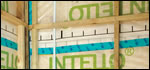
Air-tightness is a key factor in any low energy build, but is often overlooked in comparison to energy sources and insulation. Lenny Antonelli examines how air-tightness is achieved in buildings, from design stage down to the final sealing

Waste water woes

In light of Ireland’s poor performance in the recent European Environment Agency Report on drinking water quality, the issue of Ireland’s wastewater treatment from one off houses is poised to stay in the spotlight. Construct Ireland’s Pat Kennedy, environmental engineer, investigates.

Eco Equity

Eco Equity
Set in the shadow of Macgillycuddy's Reeks, Killorglin, County Kerry is a dramatic and rugged location best known as a tourist destination and home to Puck Fair. It’s also home, however, to one of Ireland’s most successful companies, FEXCO, which has opened its new low-energy corporate headquarters in the town.

Pre Form Precision

0305-preformprecisiontitle.jpg
The desire for better insulated, more environmentally friendly homes is driving ever more Irish self-builders to investigate alternatives to traditional block building. Jason Walsh visited a contemporary style factory-built timber frame house built in County Waterford in 2005.

Generation 'S'

0212generationtitle.jpg

Kirk Shanks, Senior Researcher at the Sustainability Research Development Group, the Focas Institute, DIT describes the development of this new sustainable generation.


Passive assessment

Passive Assessment
Built in 2004, Tomás O’Leary's house in Wicklow was the first in the country to be certified by the Passive House Institute — but how would it fare when subjected to a BER assessment six years later?

Creature comforts

DRUMSHAMBO VETERINARY OFFICE MERGES ARCHITECTURE AND ENVIRONMENT
Not only does the new OPW-designed district veterinary office in Drumshanbo Co. Leitrim place strong emphasis on natural ventilation and lighting, it rests comfortably in the rural landscape and boats commendable green features too. Lenny Antonelli reports

Passive Resistance

0209passivetitle.jpg
On Tuesday the 15th of March a passive house, a house that does not need to be heated, was built a few miles outside of Galway. The brain child of Lars Pettersson of Galway based Scandinavian Homes Ltd, it is believed to be the world’s first standardized and factory made passive house.

Pipe lines

District Heating
In a comparatively short time, district heating and cooling have emerged as an ideal sustainable solution for mixed use, residential, commercial and industrial developments. Far from being a new technology, district heating systems have been commonplace across Europe since the 1960s. Noel Walshe BE of district heating specialists Noel Walshe ltd explains what is required to deliver the most effective solution.